
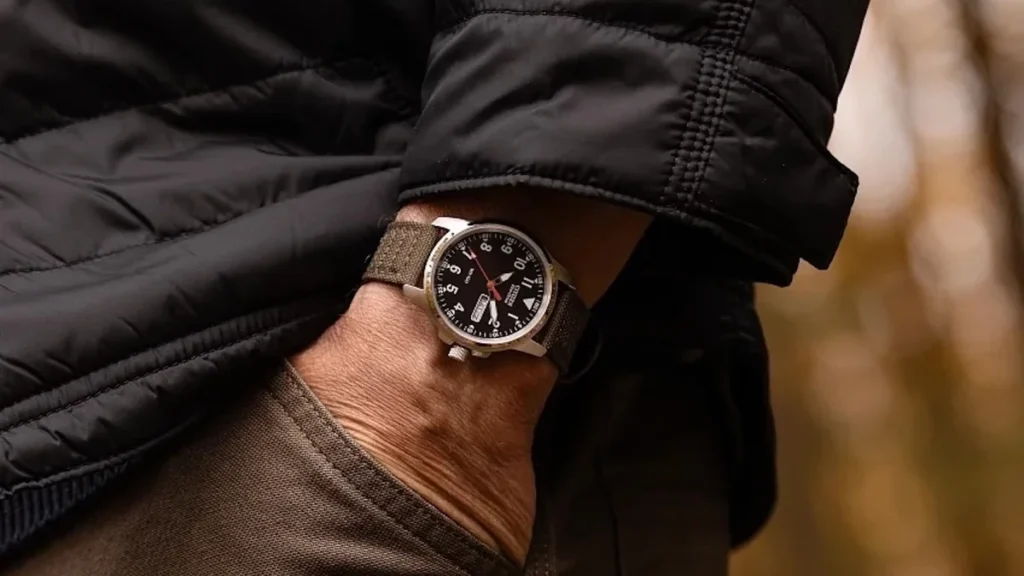
I used to buy the trend first and ask questions later. A field watch is where that habit quietly dies: if you can’t read it at 7 a.m. on the train, no amount of ‘rugged styling’ matters.
So I went looking for watches that do the boring job well. Easy to read, comfortable under a cuff, ready for a weekend outdoors. None of them need a pile of complications or a luxury price tag. Each of these six comes from a different brand and is listed under $300 (as of late October 2026 — confirm current pricing before you buy).
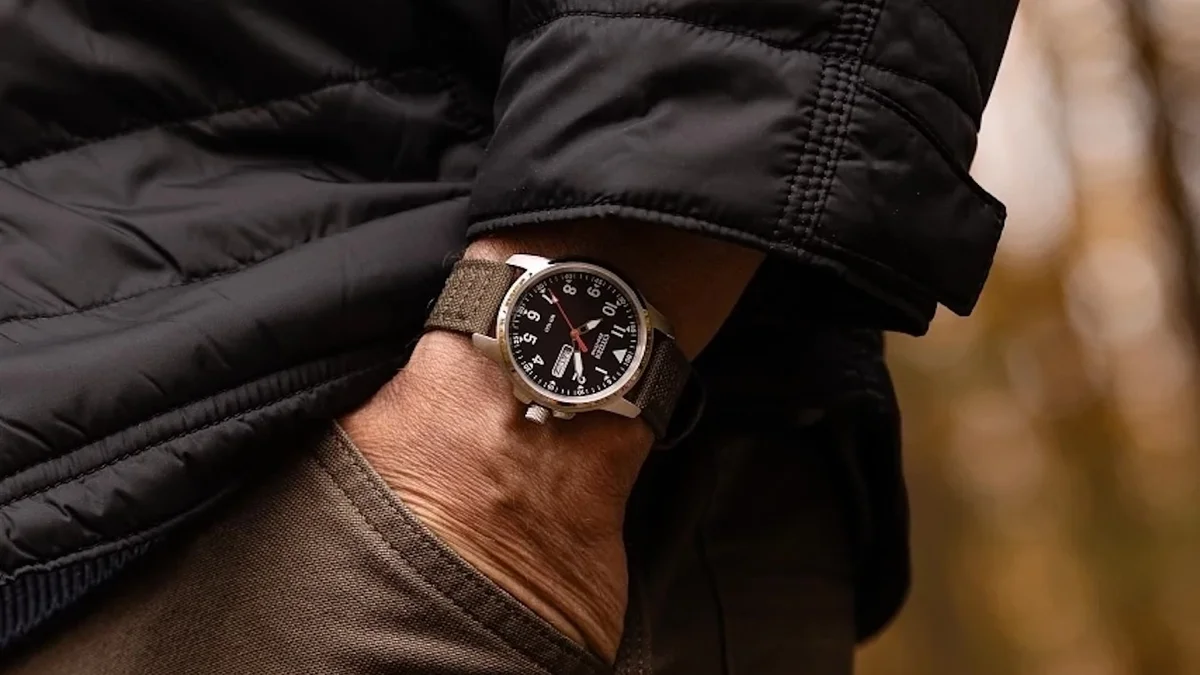
What I actually look for in an everyday field watch
Three things decide whether a watch lives on your wrist or dies on a shelf. The case has to fit — a 36mm or 37mm watch disappears under a cuff in a way a 40mm rarely does. The movement has to match your patience for upkeep: solar and Eco-Drive means fewer battery changes, plain quartz means one battery and years of nothing. And the crystal matters if your watch lives near keys and desk edges — sapphire shrugs off scratches; mineral glass does not.
With that, here are six that pass.
1. Timex Expedition Field Post Solar 36mm — $209
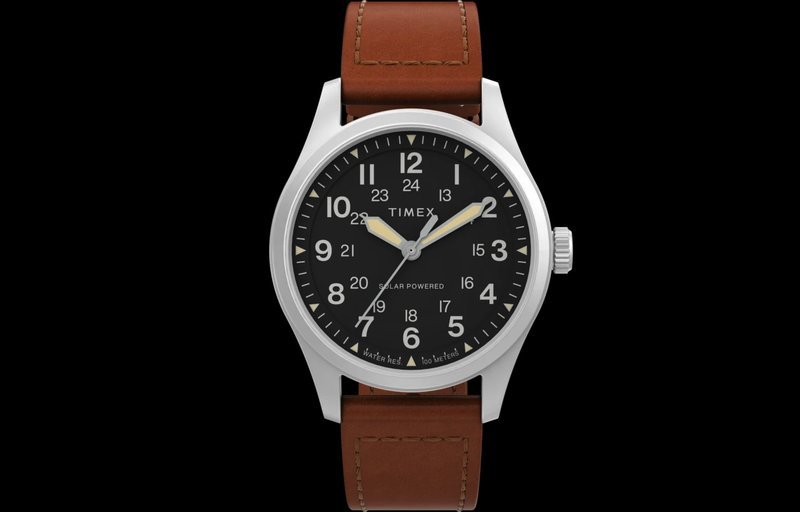
Traditional field-watch styling in a compact 36mm stainless steel case. That size is the one I recommend first if your wrist runs small or you like watches that stay under the sleeve. Timex pairs a light-powered quartz movement with sapphire crystal, luminous hands and markers, and 100-meter water resistance. The screw-down crown and caseback do the heavy lifting on the water side, and the dial stays plain enough that you never hunt for the time.
Solar is the quiet win here: fewer routine battery changes, and Timex specs a power reserve of up to four months after a full charge. Your actual number will depend on the light you give it — a watch living in a drawer isn’t charging. The leather-strap version, model TW2V00200, is listed at $209. One honest caveat: sapphire resists scratches, but a hard impact can still crack it.
2. Citizen Garrison Eco-Drive BM8180-03E — $236
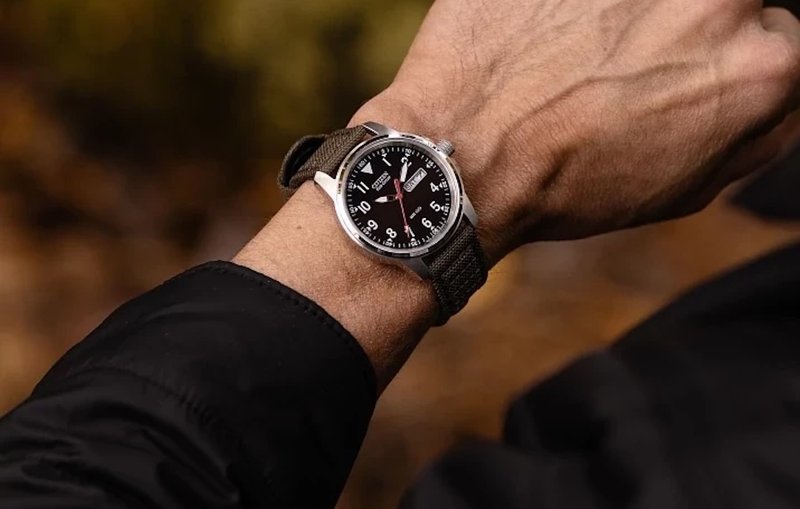
Military-inspired styling with a day-and-date display you’ll actually use — check the date without thinking about it, and that’s a small daily luxury. The 37mm stainless steel case, black dial, Arabic numerals, and green nylon strap read restrained rather than loud, which is exactly what a workday watch should do. Eco-Drive converts any light into power, so routine battery changes mostly disappear (the rechargeable cell will eventually need service, everything does). Luminous hands and markers, mineral crystal, 100-meter water resistance.
Citizen lists the BM8180-03E at $236, discounted from $295 — worth checking that price holds before you check out. The trade-off to know: the crystal here is mineral, not sapphire. If your watch regularly meets abrasive surfaces, that’s the difference in how long the dial stays clean.
3. Bertucci A-2T Original Classic — $195

This one stands apart for one reason: a solid titanium unibody case, introduced in 2004 and still built the same way. At 40mm it’s the full-size option on this list, and the titanium makes the weight difference you’d expect — corrosion resistant, strong, and noticeably lighter than steel. Bertucci puts the crown near four o’clock so it doesn’t dig into your wrist, and the fixed strap bars (no spring bars) are part of the unibody design.
The dial is the old-fashioned kind of useful: clear 12-hour and 24-hour markings, a date window, luminous hands and markers. One thing to plan for before you buy — the fixed bars mean replacement straps have to be pass-through style. A standard two-piece strap won’t fit, and discovering that at home is annoying. At $195, it’s the pick if titanium and a classic full-size field shape are what you actually want.
4. Vaer S3 Calendar Field Black 36mm — $189

Vintage military styling, 36mm across and about 8.4mm thick. That slim profile is the point: it slips under jacket sleeves without catching. Japanese quartz movement, sapphire crystal, screw-down crown, date display, and 100-meter water resistance. Interchangeable 20mm straps mean the look is yours to change — swap the band, keep the watch.
Here’s the cost-per-wear math I do with this one: $189 is the starting price, and Vaer specifies roughly 40 months of battery life. One battery, three-plus years, and it’s a watch you can wear every day without babying it. If you want a compact quartz field watch with sapphire protection and a date, this is the cleanest way to get all three.
5. Momentum Atlas Eclipse Solar 38mm — $295
The middle-ground option: 38mm, which sits between the compact vintage-inspired watches and the larger outdoor models. The black-dial titanium version runs a Japanese Epson VS42 solar movement with sapphire crystal, a screw-down crown, and 100-meter water resistance. Momentum lists a 43mm lug-to-lug measurement — useful to know before you order, since that number, not the case diameter, decides how the watch sits on your wrist.
The power reserve spec is up to six months in the dark after a full charge; your real-world number tracks with how much light the watch actually sees. Titanium here is the lighter-material option without dropping to resin. Note the configuration before ordering: the black-dial titanium version is listed at $295, while the blue-dial stainless steel version carries a different price.
6. Casio MTP-B160L-3BV — $67.86
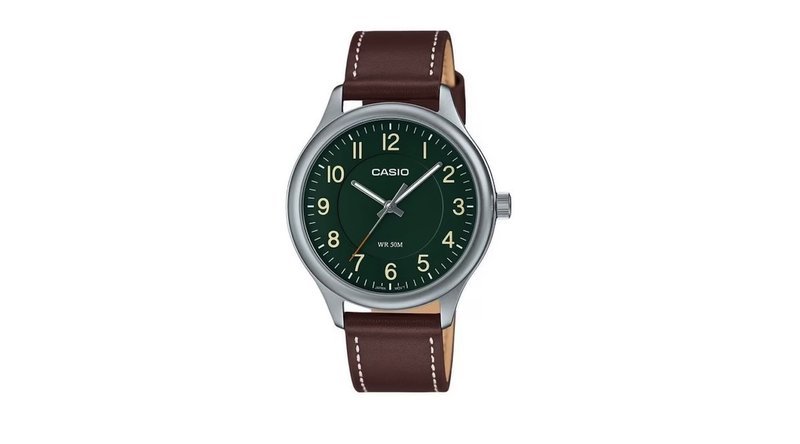
Field-inspired styling without the specialist construction, and at roughly $68 it changes the cost-per-wear conversation entirely. Earthy dial colors, leather strap, simple three-hand display — it’s the watch that goes with everything in your rotation, not the one you dress around. The 39mm stainless steel case is about 7.9mm thick, mineral glass, 50-meter water resistance, and at roughly 45 grams it’s lighter than most full-size steel watches on this list.
The battery-powered quartz movement is estimated at three years of battery life with an accuracy of plus or minus 20 seconds per month. Straightforward, and honest about what it is. If swimming is part of your routine, the 100-meter options above rate higher — the Casio’s 50 meters is fine for splashes, not for a swim. It was the least expensive selection here at $67.86; confirm current availability and pricing before buying.
Style Math: what this actually costs you
Cost-per-wear is the number I trust more than any spec sheet — divide the price by the wears you expect, and let that settle the argument. The Vaer at $189 and the Casio at $67.86 both come with long battery lives (roughly 40 months and three years per the specs), so a watch like these costs you less the more days it sees. None of these are expensive watches on paper — the real question is whether the one you pick is the one you’ll actually reach for at 7 a.m., thirty times a week, for years.
Which one should you buy?
Match the features to the days you actually have. A case that fits comes first — if you lean compact, the Timex, Citizen, or Vaer at 36–37mm is where I’d start. Solar or Eco-Drive if you hate battery changes; plain quartz if you’d rather buy once and forget. Sapphire if your watch lives near keys and desk edges. And if the goal is a straightforward watch at the lowest listed price, the Casio rounds out the group at under $70.
FAQ
Are these watches good for swimming?
The Timex, Citizen, Vaer, and Momentum all carry 100-meter water resistance, which covers swimming. The Casio rates 50 meters — fine for showers and splashes, but I’d keep it out of a pool. The Bertucci’s rating isn’t stated in the spec details, so check it before any serious water exposure.
Do I need sapphire crystal at this price?
Not strictly, but it’s the easiest upgrade on this list. Sapphire shrugs off daily scratches that mineral glass won’t survive — keys, desk edges, a bag that’s already lived a life. If your watch will meet abrasive surfaces often, I’d pay for the sapphire version rather than a bigger case.
Solar or Eco-Drive — are they the same thing?
They solve the same problem in the same broad way: light becomes power, so routine battery changes mostly disappear. The rechargeable cell in either eventually needs service; nothing lasts forever. For most people the difference is brand and price, not day-to-day experience.
A note from Lena
I’ve stopped buying watches for the photos and started buying them for the 7 a.m. glance. These six all passed that test on paper, and the fit question — 36mm under a cuff or 40mm on the wrist — is the one only you can answer. Pick the watch you’d actually reach for, and the cost-per-wear does the rest.
More from the rotation: my capsule wardrobe guides, and cost-per-wear breakdowns for the pieces worth keeping.