
On a Sunday, pulling old scarves out of the back of my closet, I realized I’d never once asked why a piece of cloth with a design on it is the first thing people think of when they think of a country. Not the capital, not the food. The flag.
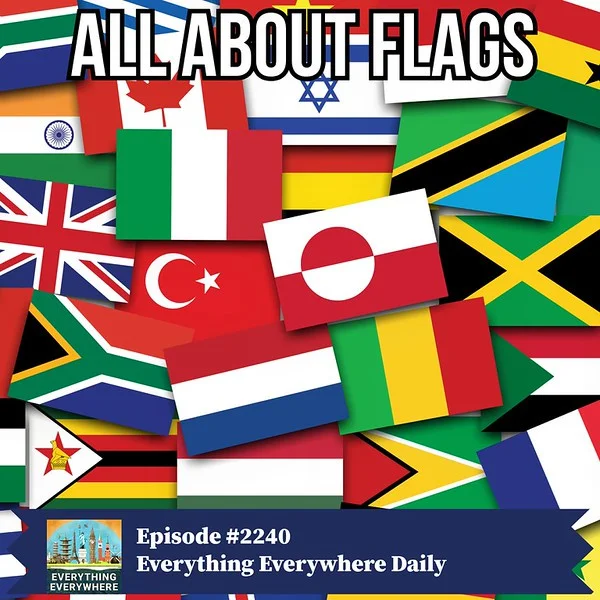
I’m not a historian. I spent five years buying clothes in a department store, and most of my ‘knowledge’ was built around labels. But this little deep-dive into where flags came from stuck with me, and I think you’ll see why the thing we hang from lampposts has one of the strangest careers of any object we use.
Here’s the short version: the national flag is the newest thing in flag history. For most of the time, flags were about armies, ships, and rulers — and most flags you recognize today began as someone’s way of saying ‘who are you’ from a long way away.
Flags started as battlefield markers, not national symbols
Originally, there were no flags. The earliest ancestors weren’t pieces of cloth at all. Ancient armies needed a visible object soldiers could rally around, so many early civilizations mounted symbols on poles. Egyptians used standards topped with gods, animals, or royal symbols. Mesopotamian armies carried similar objects, and Persian armies used famously elaborate royal standards.
The Romans built the most elaborate system I came across. Every legion carried an aquila — an eagle — and losing it was considered a catastrophe and a profound disgrace. They also used a vexillum, a rectangular piece of cloth hanging from a horizontal crossbar, which is closer to what a flag looks like. The word vexillology, the study of flags, comes from that object.
One combination has stuck ever since: a flag both identifies a unit and carries emotional weight. Practical identification plus a little pride. It’s the same reason a good seamstress’s mark on a garment means something.
Asia got cloth on poles first
China appears to have been one of the earliest civilizations to make extensive use of cloth banners resembling modern flags. Chinese sources describe them as early as the Zhou period, beginning in the 11th century BC. The key was lightweight fabric: a rigid symbol on a pole could be seen, but a large piece of silk fluttering above troops was far more visible. That basic advantage — being easy to see on a battlefield — explains much of the flag’s success.
Flag traditions developed independently across much of Asia. Japanese warfare produced an especially elaborate culture: samurai armies used banners such as the hata-jirushi, and later the long vertical nobori, while soldiers sometimes carried small identifying flags called sashimono on their backs. Islamic armies gave banners enormous symbolic weight too — Muhammad and the early community were traditionally associated with black and white standards, and later dynasties tied themselves to particular colors. The Abbasids, for example, famously adopted black. As those states spread from Spain to Central Asia, colors acquired political associations that survive in many modern flags.
European flags meant a person, not a country
European flag history changed in the Middle Ages. As feudal society developed, rulers and noble families needed recognizable symbols, and beginning particularly in the 12th century, European heraldry developed into a systematic language of coats of arms.
A knight might display the same basic design on his shield, his armor, his horse equipment, and on a banner — which produced the heraldic banner: essentially a coat of arms turned into a rectangular flag. So a medieval flag usually represented a person, especially a nobleman or monarch, rather than a country. A French soldier fought beneath the banner of his lord, who fought beneath another nobleman’s banner, who ultimately served the king. There wasn’t necessarily a single French national flag recognizable to everyone in France until the French Revolution.
The Crusades also pushed forward one detail you see on many modern national flags: the cross. Christian armies used crosses both as religious symbols and practical identifiers — Maltese cross, Jerusalem cross, Greek cross, and many other variants. The most important surviving family is the Nordic cross, which eventually inspired the flags of Sweden, Norway, Finland, and Iceland.
Denmark’s Dannebrog — a white cross on a red field — is a good example. Danish tradition dates it to the Battle of Lindanise in Estonia in 1219, where legend claims it fell from heaven, and it’s firmly documented as early as the 14th century. It’s considered the world’s oldest continuously used national flag.
The first ‘real’ flags belong to sailors
Here’s a part I didn’t expect to learn: the first places to use flags to represent a whole community were seafaring city-states, and you can’t understand modern flags without maritime history.
Ships created a problem land armies didn’t face. From several miles away, sailors needed to know who that ship was — friend, enemy, merchant, or pirate? Was it Dutch, English, Spanish, or Venetian? A coat of arms painted on hull would be too small to see from that far. A large flag was the answer.
By the 13th century, cities like Genoa and Venice were flying distinctive maritime flags. Genoese ships famously flew the red cross of St. George on white, and Venice developed the banner of the Lion of St. Mark. These represented political communities rather than individual rulers, and during the late Middle Ages and the Age of Exploration, European states increasingly required ships to display flags showing nationality or allegiance. Flags standardized much earlier at sea than on land — in many cases, what eventually became a country’s national flag began as a naval or merchant flag.
One of the most influential moments in all of this was the Dutch struggle against Spain in the 16th and 17th centuries. Dutch forces used a horizontal orange-white-blue flag associated with William of Orange. Over time, orange was replaced by red, creating the familiar red, white, and blue of the Netherlands. Because the Dutch Republic became one of the world’s leading maritime and commercial powers, that simple three-striped design spread far. It was recognizable from a distance, relatively easy to manufacture, and distinguishable even partly obscured — and it helped establish the tricolor as a common template in flag design.
National flags are a 19th-century invention
Flying flags from fixed flagpoles on land became common much later than flags themselves. The big transition happened mainly from the late 18th through the 19th century, with widespread civilian flagpoles especially common in the late 19th and early 20th. Before that, most land flags were carried on staffs by soldiers or officials, or temporarily mounted on castles and gates.
Tall poles were much more characteristic of ships, which is why so much flag terminology — mast, ensign, jack, halyard — has maritime origins.
The 19th century was the great age of national flag creation. As nationalism spread across Europe and Latin America, political movements increasingly adopted flags before they even had countries. A flag became an argument: ‘We are a people, and we should have a state.’ Italian nationalists rallied around the green-white-red tricolor before unification, and German nationalists adopted black, red, and gold.
What’s a canton, again? Tiny vocabulary lesson
The scholarly study of flags is vexillology, and formal vexillology is surprisingly young. People had studied flags for centuries — heralds, naval officers, military historians — but the field didn’t emerge as a distinct discipline until the 20th century. The word was coined in 1957 by the American scholar Whitney Smith, who combined the Latin vexillum with the suffix -logy, meaning ‘study of’.
Smith went on to found the Flag Research Center in 1962. In 1965, he helped organize the first International Congress of Vexillology, and in 1967, the International Federation of Vexillological Associations — FIAV — was established. The field got an international scholarly community with its own terminology and journals.
Basic terms, now that you’ll know them instead of fumbling:
- The hoist is the side attached to the pole. The fly is the side extending away from it.
- The canton is normally the upper corner nearest the hoist — the blue rectangle with stars on the United States flag is the best-known example. The Union Jack occupies the canton of the Australian and New Zealand flags, and British colonial flags frequently placed the Union there too. Cantons are historically important because they often indicate political relationships.
- A charge is a symbol placed on the flag — stars, crescents, suns, crosses, animals, plants, weapons, shields. The Canadian maple leaf is one, and so is the cedar on Lebanon’s flag and the eagle on Mexico’s.
Flags as a competition: the record-holders
Flags also turned into a competition, and for decades countries have tried to outdo each other in the race to fly the biggest one. A few records, via Guinness World Records:
The tallest flagpole in the world stands in Egypt’s New Administrative Capital near Cairo. Guinness records it at 201.952 meters (about 662.6 feet), completed in December 2021 and built to fly the Egyptian national flag. The largest flag ever flown measured 3,235.79 square meters (about 34,829 square feet); it was raised on Baku’s Seaside Boulevard in Azerbaijan on November 18, 2025. And the largest flag ever made is bigger still: in 2013, Qatar created a national flag measuring about 101,978 square meters — large enough to cover roughly 14 soccer fields — as part of National Day celebrations. Guinness recognized it at the time, though it was laid out on the ground rather than flown from a pole.
Style Math: why the boring ones work
Lens from a former buyer: a flag works the way a good wardrobe works. The successful designs have been simple, recognizable at a distance, and easy to make — the same three tests I’d run on any piece before buying it past the first look. The tricolor template survived for that reason. And the best ‘investment’ pieces — the ones that outlive every trend cycle — are the ones where identity and function aren’t in conflict. Flags actually do the math that a lot of closets skip.
FAQ
Partly because that combination proves itself on the water. The Dutch flag — orange, white, and blue in the 16th-17th centuries, with orange becoming red over time — established the tricolor as a common template, and red-white-blue designs became a favorite across Europe and Latin America as national movements adopted flags in the 19th century. A simple three-striped design is recognizable from a distance, easy to manufacture, and still distinguishable partly obscured — the same feature that made it useful on ships.Why do so many national flags use red, white, and blue?
Denmark’s Dannebrog, a white cross on a red field. Danish tradition dates it to 1219, and the design is firmly documented from at least the 14th century. It’s considered the world’s oldest continuously used national flag.What’s the oldest national flag still in use?
Deceptively so. Flags and flag-like objects are ancient — the earliest were symbols on poles, not cloth. But flags representing entire nations is a relatively recent development: the big shift from flags that stood for a person or a ship to flags that stand for a country happened mainly in the 19th century, when nationalism spread across Europe and Latin America.Are country flags a recent thing?
A note from Lena: after this, you will never look at a flagpole the same way. Every flag is a thousand-year-old argument about who was on which side — eventually won on every side, because every country sells a flag. That, I think, is the funniest part of the whole story.
For more on the quiet history behind objects we never think about, see my other lifestyle notes and the story of this blog.