
The last time I stood in a lumberyard holding a board up to the light, I wasn’t window shopping. I was trying to figure out why my second trip to a different yard was actually necessary. Most of my recent mudroom build called for plain-sawn walnut, but the tall locker doors needed something more, and that’s where the conversation about lumber cuts started.
It’s a detail most of us skip, but it’s the difference between a door that stays straight and one that quietly starts to stick in a few years.
The short version: the way a log is milled decides how a board moves with the seasons, how its grain looks, and what you pay for it. Plain-sawn is the default, quarter-sawn is the workhorse for long pieces, and rift-sawn is the premium, ultra-straight option. Here’s what that actually means at the lumberyard.
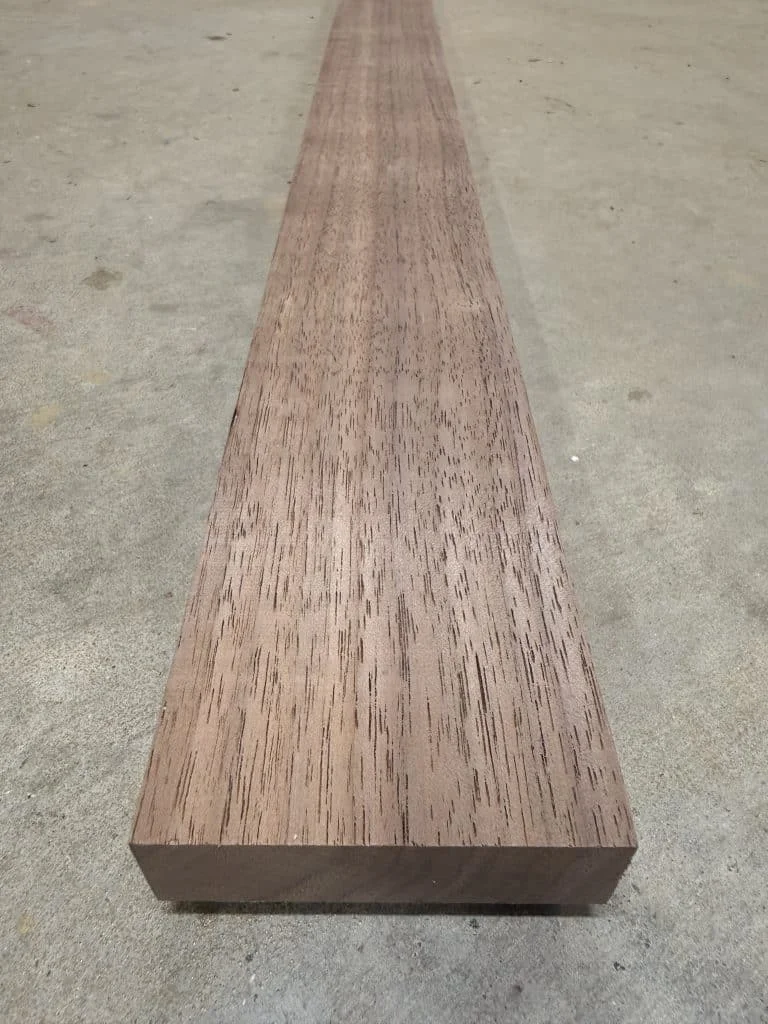
Why the cut matters more than the species
Wood is a living material. As humidity rises and falls through the year, boards expand and contract across the grain. The angle at which the growth rings meet the face of the board determines how much that movement happens, and in which direction.
That’s what plain-sawn, quarter-sawn and rift-sawn are describing. They’re not three different woods. They’re three ways of slicing the same log, and each one trades off stability, grain pattern, and cost.
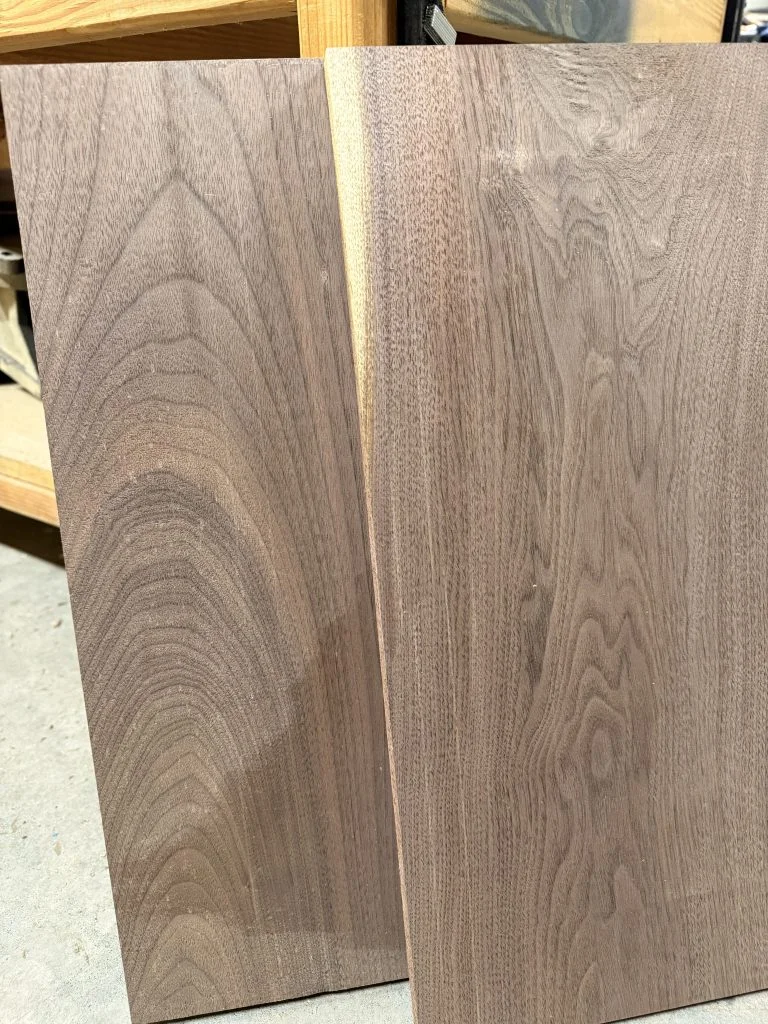
Plain-sawn: the default for a reason
Plain-sawn lumber, also called flat-sawn, is the cut you’ll find stacked highest in any yard. The log is sliced straight through in parallel cuts, so the growth rings meet the face at a shallow angle, around 0 to 30 degrees. That’s what creates the sweeping, arched cathedral grain you see on most hardwood boards.
Where it shines: it’s the most affordable option, widely available, the most efficient use of the log, and that dramatic grain is genuinely beautiful.
Where it’s tricky: it’s the least dimensionally stable of the three. It’s more prone to cupping, bowing, or twisting over time. For face frames, drawer fronts, and most everyday furniture parts where a little movement won’t matter, it’s a great choice. It gives you the most character for the money.
Most of my mudroom cabinets are plain-sawn walnut for exactly that reason.
Quarter-sawn: the pick for long, tall pieces
Quarter-sawn is cut differently. The log is divided into quarters first, then sawn so the growth rings meet the face at a steep angle, roughly 60 to 90 degrees. The grain comes out much straighter and more consistent than plain-sawn, and in species like white oak it can show off striking ray fleck, that shimmering figure that reads as something special.
Where it shines: it’s significantly more stable than plain-sawn, less likely to cup, and moves more predictably through the seasons. That makes it the go-to for long vertical parts.
Where it’s tricky: it costs more, the yield per log is lower, and it can be harder to source. Sometimes you’ll need a second trip to a different yard, which is exactly what I did. My locker doors run about 71 inches tall, and the stiles that frame them run the full height. A long vertical board like that is exactly what will twist or cup if it’s the wrong cut. I tracked down quarter-sawn walnut specifically for those stiles, and I only needed three boards. But the right cut is what keeps those doors closing properly for years.
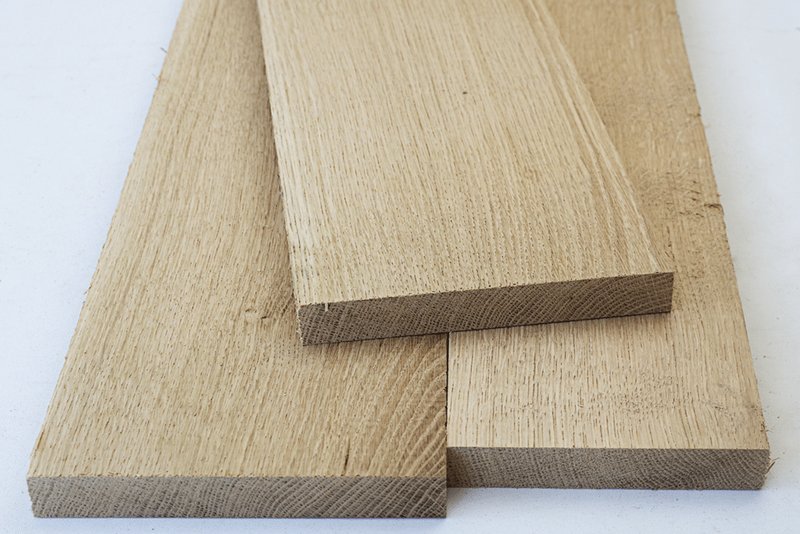
Rift-sawn: the premium, ultra-straight option
Rift-sawn sits between the other two in angle, with the growth rings meeting the face at about 30 to 60 degrees. The result is an extremely straight, uniform grain with very little variation. Unlike quarter-sawn, rift-sawn boards typically don’t show ray fleck.
Where it shines: a very consistent straight grain, high stability, and a clean, modern look. It’s the cut you reach for when a uniform, linear grain is the whole point of the piece.
Where it’s tricky: it’s the least efficient milling method, harder to find, and typically the most expensive. That’s why it’s usually reserved for high-end cabinetry and modern furniture where that straight, quiet grain is the star.
Quick comparison
| Plain-sawn | Quarter-sawn | Rift-sawn | |
|---|---|---|---|
| Grain | Cathedral, arched | Straight, with ray fleck in oak | Very straight, uniform |
| Stability | Least stable | Highly stable | Highly stable |
| Cupping risk | Higher | Lower | Lower |
| Availability | Most common | Less common | Least common |
| Cost | Lowest | Higher | Highest |
| Best for | General projects | Doors, long vertical parts | High-end, modern furniture |
How I’d choose for your project
If you’re doing general woodworking, plain-sawn is the right call. It’s affordable, easy to find, and that cathedral grain looks great on face frames, drawer fronts, and most furniture where a little movement is acceptable.
If you’re building doors, tabletops, or anything with long vertical parts, budget for quarter-sawn. Its dimensional stability is what keeps tall pieces flat and straight over time. It’s the upgrade that actually earns its price.
If you want a premium, modern finish with the straightest, most even grain you can get, rift-sawn is worth the investment. It’s a splurge, but for a statement piece it delivers exactly what you’re paying for.
One habit that saves me every time: inspect boards for defects and check that the grain runs consistently before you buy, especially for the parts where stability matters most. And if you’re working to a budget, plain-sawn gives you the most value per board foot.
FAQ
Is quarter-sawn really worth the extra cost?
For long, tall, or load-bearing pieces, yes. The stability difference is real, and it’s what keeps doors and tall stiles from warping. For small parts or pieces where movement won’t matter, plain-sawn saves you money.
What’s the difference between quarter-sawn and rift-sawn grain?
Quarter-sawn can show ray fleck, especially in oak, while rift-sawn gives a straighter, more uniform surface without that figure. Both are stable. Choose quarter-sawn if you want that shimmer, rift-sawn if you want the cleanest linear look.
Can I mix cuts in one project?
Absolutely, and that’s usually the smart move. I used plain-sawn for most of my mudroom cabinets and switched to quarter-sawn only for the tall door stiles. You pay for stability exactly where you need it.
A note from Lena: the right cut is one of those things that sounds minor until your door starts sticking. Spend the extra trip to find the right board, and thank yourself in a few winters.
Related reads: capsule wardrobes and cost-per-wear for furniture if you’re thinking about buying pieces that last.