Standing in a yarn aisle with zero experience is a special kind of overwhelm. Spools of every color, hooks in every size, and every label speaking a language you don’t know yet. I felt that same spin the first time I picked up a hook.
Here’s the thing: you don’t need most of it. Crochet starts with a handful of simple things, and once you see the pattern, the aisle stops being intimidating. Let me walk you through it the way I wish someone had.
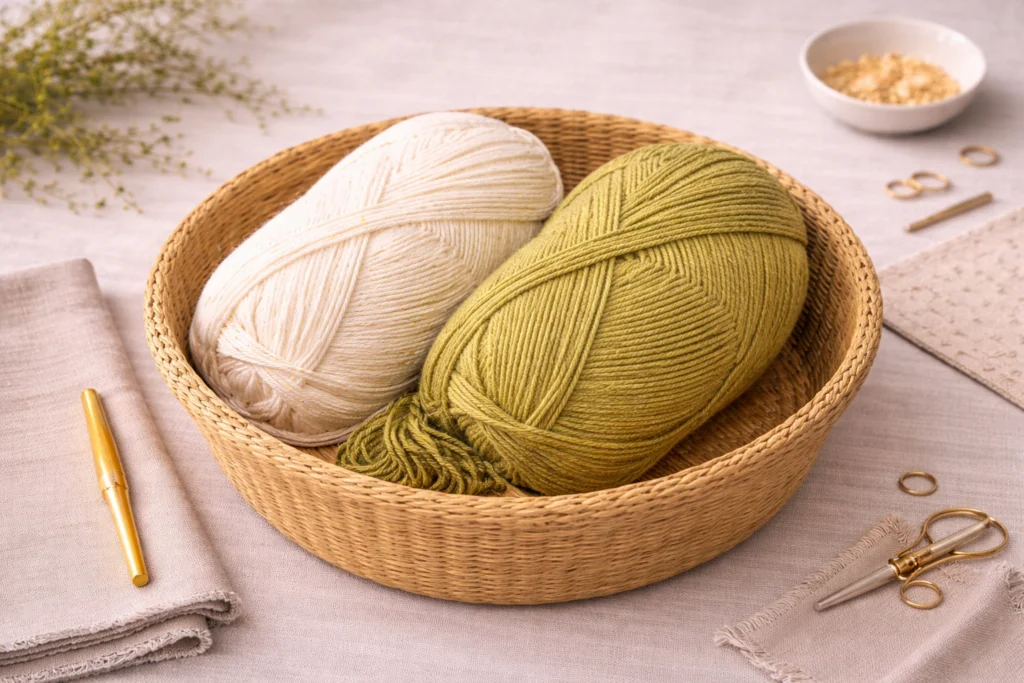
The Short Shopping List
Before you buy a single thing, know that the full list is short. That’s the whole secret.
- Yarn — a beginner-friendly one, and I’ll tell you exactly how to pick it below
- A crochet hook — sized to match your yarn, with a recommendation in a moment
- Small, sharp scissors — any pair from your desk drawer works
- A tapestry needle — for weaving in ends once a piece is finished
- Stitch markers — optional but genuinely helpful for tracking where a row or round begins
- A measuring tape — for checking gauge as your skills grow
That’s it. You don’t need a kit, a box of tools, or a full craft shelf. The basics carry you a long, long way.
Picking Yarn That Forgives You
Yarn comes in every fiber, texture, and thickness imaginable, and for a beginner the right choice makes learning dramatically easier. Three things to look for:
Smooth, not fuzzy. A smooth surface lets you see your stitches clearly and undo mistakes without a fight. Fuzzy yarn hides everything.
Medium weight — worsted, or category 4. It’s the sweet spot: easy to handle, widely available, and forgiving. Yarn that’s too thin or too bulky both fight back when you’re still learning the hand movements. Master medium, then branch out to other weights once it feels natural.
Light or neutral color. Dark yarn swallows your stitches. A light or neutral color gives you clear stitch definition, which makes learning feel like progress instead of guesswork.
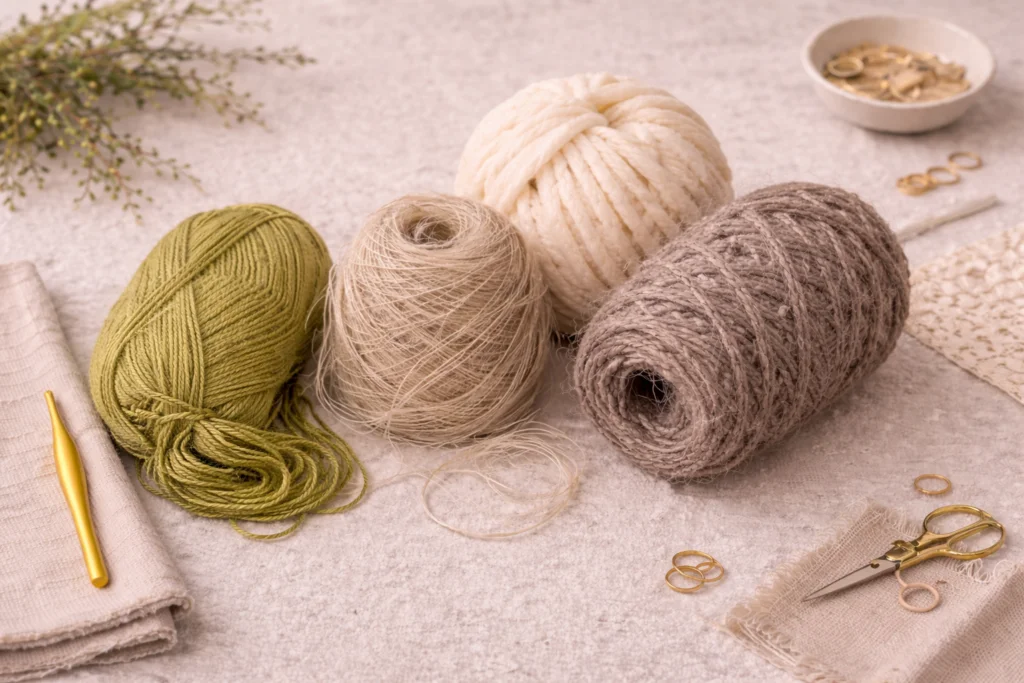
On fiber: acrylic and acrylic blends are the one I’d point you to. They’re easy to find at most local stores, budget-friendly, and they work up cleanly — the fibers don’t split as you pull them, which is exactly the kind of thing that makes learning harder. You can absolutely explore cotton, wool, and other fibers later. Start where it’s kind to you.
And a few things to leave on the shelf for now: eyelash and novelty yarns, very fine weights like lace or fingering, and super bulky or highly textured yarns. All of them are lovely later. All of them make the first few weeks unnecessarily hard.
Crochet Hook Sizes, Without the Jargon
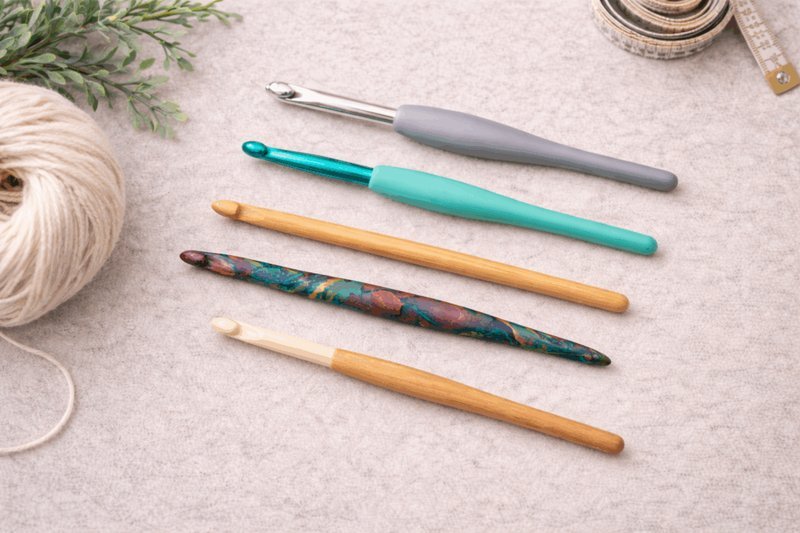
Hooks come in different sizes and materials, and for a beginner the size matters far more than the material. A few ground rules:
- Hook sizes are labeled with letters, numbers, or millimeters — all of them point to the same tools
- Your yarn label lists the recommended hook size for that yarn, so it’s your first stop
- For worsted-weight yarn, a 5.0 mm (H/8) or 5.5 mm (I/9) hook is the standard beginner pairing
On material, you’ll find three families in the shop:
Metal hooks glide easily through the yarn, which is why most people start here. If you’re choosing one hook, make it metal.
Plastic or resin hooks work too, though they can be a little less slippery as you pull stitches through.
Wood hooks have more grip, and some crocheters grow to love that feel later on.
There’s no single “best” hook — only the one that feels good in your hand. My one extra note: an ergonomic or soft-grip handle is worth the small difference, especially once you’re crocheting for longer stretches.
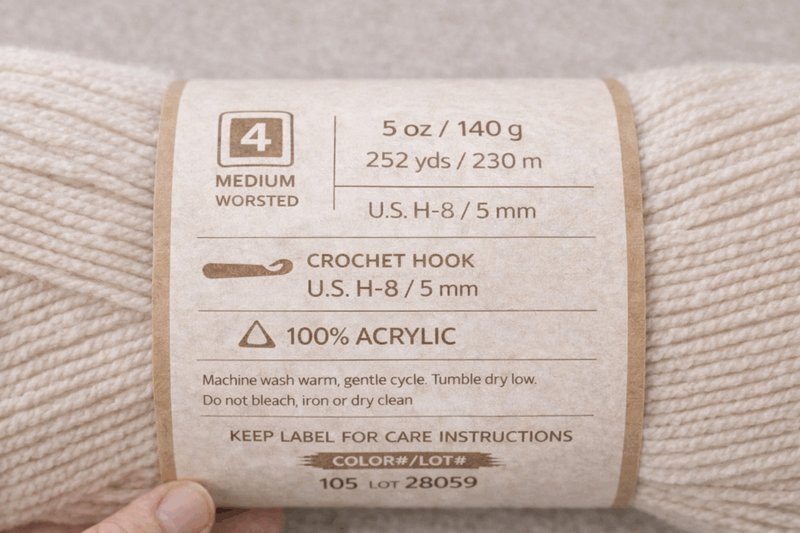
Reading a Yarn Label
A yarn label looks like a data sheet, but you only need four or five fields to get started.
Yarn weight — the number (like 4) or the word (like “worsted”). This is the most important line on the label, and the one to check first.
Recommended hook size — the yarn’s own suggestion for what hook to pair with it. Most worsted-weight yarns point to an H (5.0 mm) or I (5.5 mm) hook, which matches what you’ll want to start with.
Fiber content — acrylic, cotton, wool, or blends. For your first projects, acrylic or an acrylic blend is the safe, forgiving choice.
Yardage — how much yarn is actually in the skein. When you’re practicing stitches, one or two skeins is plenty.
Care instructions — easy to skip at first, but important once you’re making gifts or blankets.
You don’t need to decode everything on day one. Weight and hook size. That’s the whole job for now.
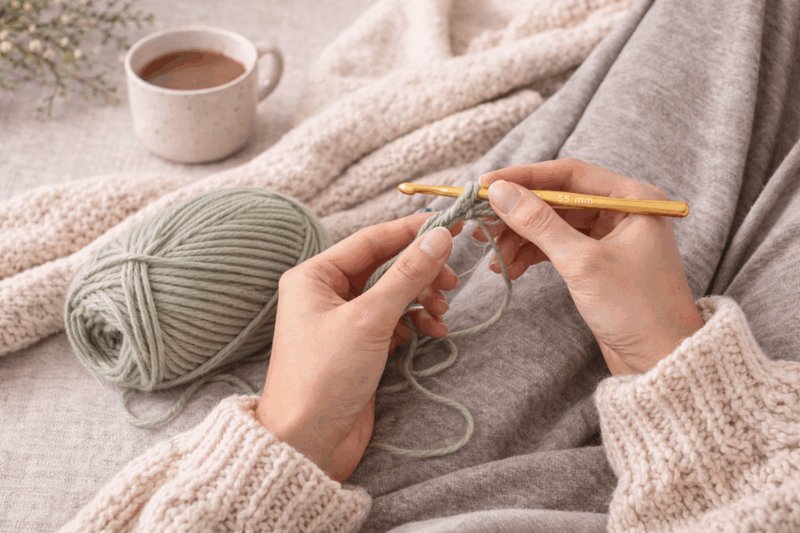
Your First Project: Keep It Simple
The combination that gets you moving without friction:
- Worsted-weight yarn (category 4)
- A 5.0–5.5 mm hook — I personally start on the 5.5 mm I hook
- A light or neutral color
Most people begin with a learn-to-crochet class of some kind, which walks you through the first stitches step by step. After that, the classic first projects are dishcloths, scarves, and small swatches. They’re short, they’re cheap, and they let you practice without worrying about a finished piece.
As you get more comfortable, you’ll start to feel how different yarns and hooks behave — and how to adjust for your own hand and your own projects.
A Note on Patience
You don’t need to get everything perfect right away. Crochet is practice, patience, and a little curiosity, and the right supplies just make the learning easier. Confidence comes from picking the hook up and trying — not from having the perfect setup.
Take your time, enjoy the process, and remember: every crocheter starts right where you are.
Ready for more? Series 3 covers the basic tools and accessories that go beyond yarn and hook.Which hook size should I buy first?
Start with a 5.0 mm (H/8) or 5.5 mm (I/9) hook and worsted-weight yarn. That pairing is the standard beginner combination, and it’s what most worsted yarn labels recommend anyway.
Do I really only need one hook?
For the first few weeks, yes. One metal hook that matches your yarn takes you through the basic stitches. You can add other sizes later as you take on different projects and weights.
What if my yarn splits while I’m learning?
That usually means the fiber is fuzzy or loosely spun — a sign to switch to a smoother acrylic or acrylic blend. Splitting makes stitches harder to see and undo, and it’s one of the most common beginner frustrations.
a note from Lena: I used to buy the trend first and ask questions later. In yarn, that means a bin of novelty fibers I never used. Buy the basics once, do the practice, and let the fancy stuff wait until you’ve earned it.