The first time I sat down with a crochet hook, I held it the way I hold a fork. Wrong? Not exactly. But after an hour of crooked stitches and a stiff wrist, I realized I was fighting the tool instead of working with it.
That’s the thing about crochet tension — it’s not a talent. It’s a habit. And habits can be built, broken, and rebuilt without anyone watching.
The two grips that actually work
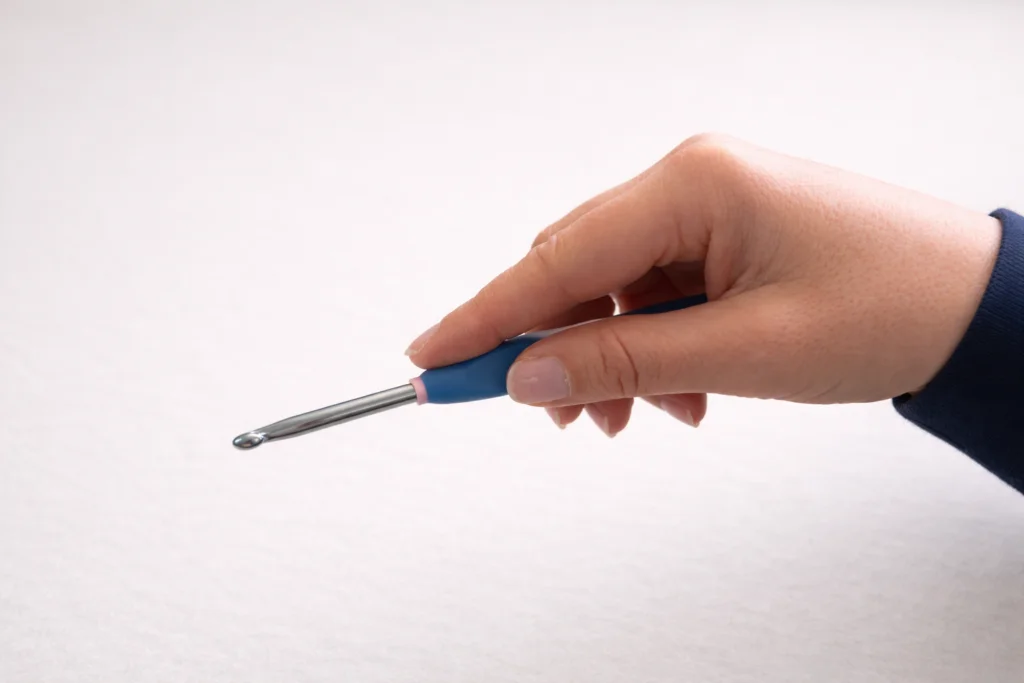
There’s no single right way to hold a crochet hook. But most crocheters settle into one of two grips, and both have a place in my practice.
The knife grip
Imagine holding a dinner knife. That’s the idea. Your hand rests over the hook, your wrist and forearm do the moving, and the motion stays relaxed. It’s the grip I reach for on longer projects because it keeps my hands from tiring out. If you’re new to crochet and your stitches feel wobbly, this is the place to start.
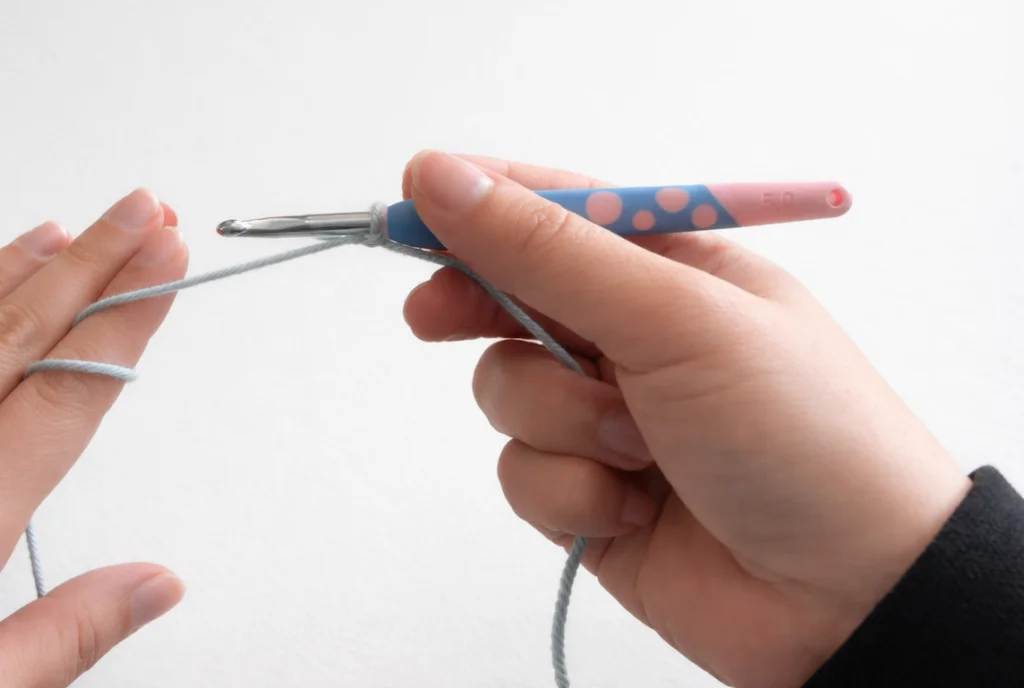
The pencil grip
Hold the hook the way you’d hold a pen. Your fingers guide it, the movements are smaller, and the control is tighter. Experienced crocheters use this grip for detailed work, and many stick with it exclusively. If it feels natural to you, it is — no one’s grading your handwriting.
I use the knife grip for scarves and the pencil grip for anything with small stitches. Your mileage may vary, and that’s fine.
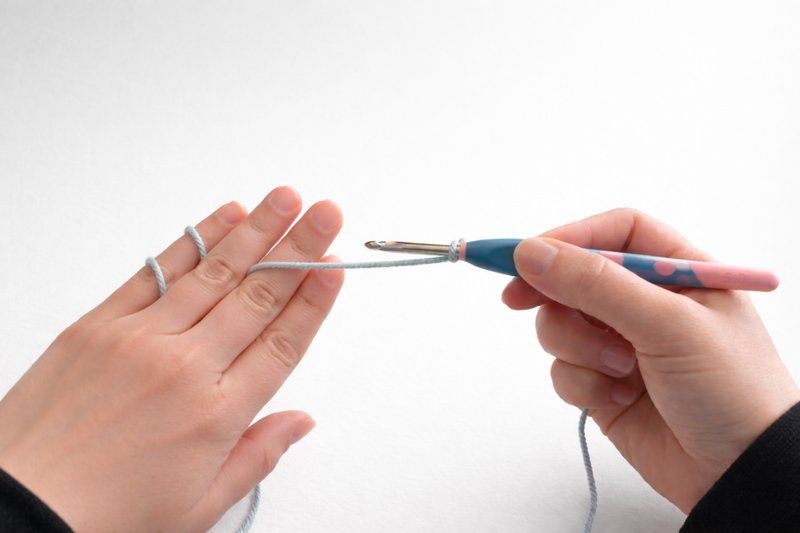
Where does your yarn go?
The hand that holds your yarn is doing more work than you think. It’s responsible for the resistance your hook feels with every pull. There’s no universal setup — try a few approaches and keep what feels smooth.
- Drape the yarn over your index finger
- Loop it once around a finger for more control
- Let it rest loosely in your hand
The goal is guidance, not a death grip. If your stitches come out tight and stiff, your yarn hand is probably holding on too hard. If they’re loose and gap-filled, you’re letting go too much. Adjust one variable at a time.
What tension actually controls
Tension is how tightly or loosely your yarn stays under control as you work. It shapes three things:
- Stitch size
- How the fabric drapes
- The overall consistency of your project
Most beginners struggle with this, and that’s completely normal. I made my first swatch look like a topographic map of bad decisions. The fabric wasn’t square. The edges wavered. I kept it anyway.
Signs your tension is off
Too tight:
- Hook fights its way into stitches
- Fabric feels stiff and board-like
- Your hands tire faster than they should
Too loose:
- Gaps between stitches
- Uneven stitch sizes
- Fabric looks floppy or inconsistent
If you see any of these, don’t panic. Tension is the first thing that improves with practice, and it improves fast once you stop fighting it.
Five things that actually help
- Relax your hands. Tight hands make tight stitches. Shake them out between rows.
- Slow down. Speed is the enemy of even tension. Go slower than feels comfortable.
- Match your hook to your yarn. The hook size printed on your yarn label exists for a reason. Use it.
- Swatch, don’t project. Practice on small squares until your stitches look even, then start the real thing.
- Take breaks. Fatigue sneaks in before you notice it, and it shows up in your stitches long before it shows up in your hands.
Even experienced crocheters adjust their tension when they switch yarns or hook types. Don’t hold yourself to a standard that no one actually keeps.
Frequently asked questions
Which grip should a beginner use?
The knife grip is the gentler starting point. It’s more stable, requires less fine motor control, and lets you build muscle memory without straining your fingers. Switch to the pencil grip once your stitches feel consistent and you want more precision.
My stitches are uneven. Is my hook wrong?
Probably not. Uneven stitches almost always come from uneven tension, not the wrong tool. Try slowing down and making sure your hook size matches your yarn. If the problem persists after a few swatches, then consider switching hook types.
Do I need to be consistent every single stitch?
No. Consistency is a skill, not a birthright. Some rows will be better than others, and that’s the whole process. What matters is that you’re working and noticing what changes. That awareness is what turns a wobbly swatch into even fabric.
A note from Lena: I used to buy the trend first and ask questions later. Crochet taught me to ask questions first and let the stitches answer. It’s a slower way to make something, but it’s the most honest way I know.
Up next: Essential Crochet Stitches — the core stitches you’ll see again and again in any pattern.
Keep practicing. Stay patient with your hands. Crochet is meant to feel creative, not stressful. More crochet and craft tutorials