
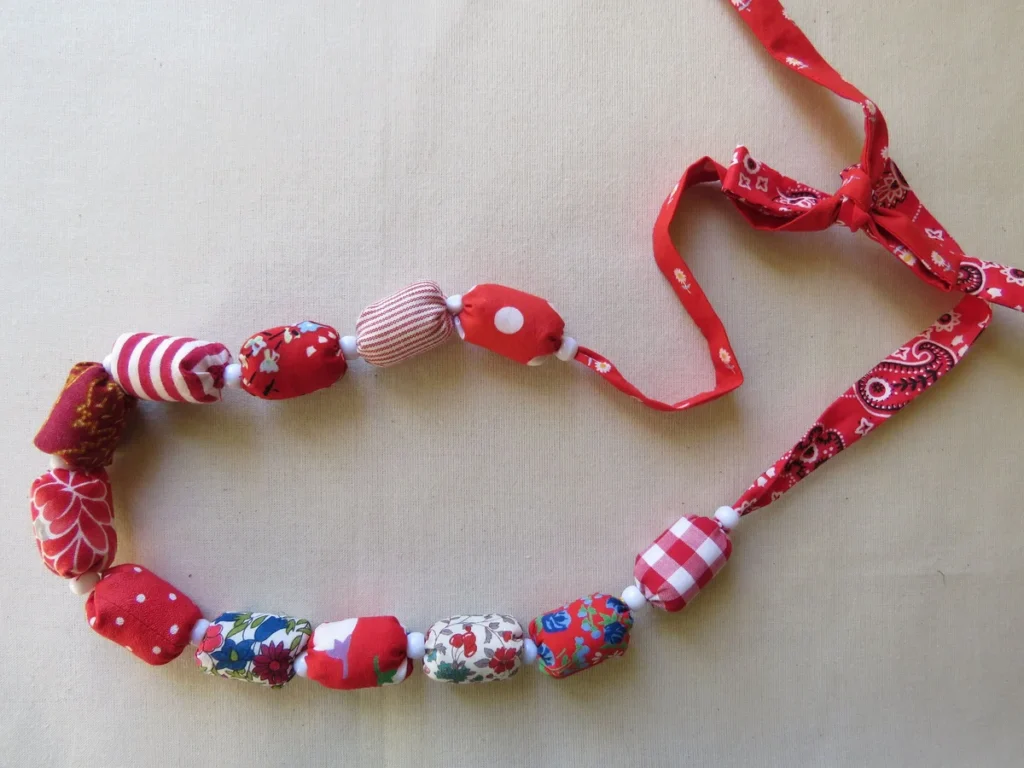
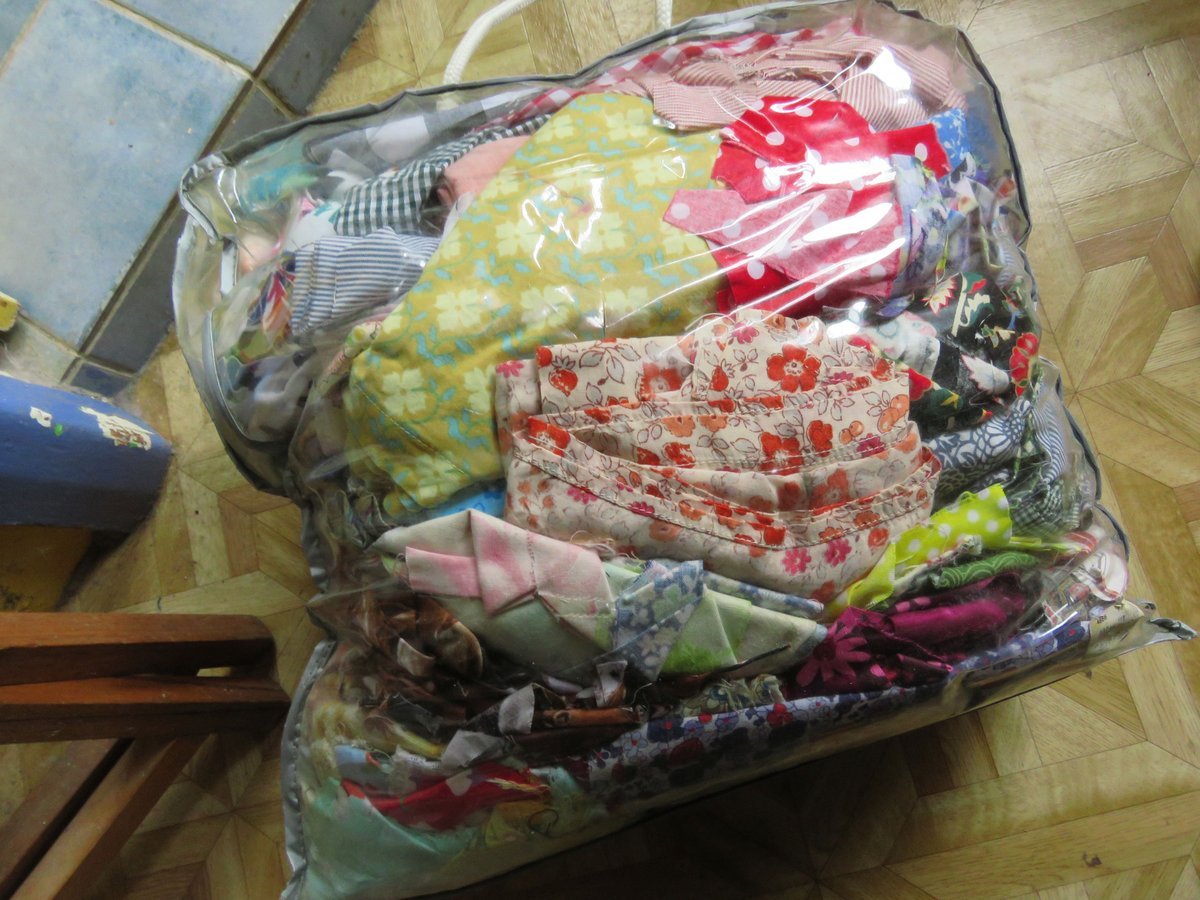
Most of my scrap fabric has been sitting in a bag for decades. The bag itself is full of nostalgia — offcuts from things I made years ago, saved for a patchwork quilt that never quite happened. Last weekend I finally gave it a second life.
I was browsing workshops for hand stitchers when a textile necklace by Canadian jewelry artist Alison Dawson stopped me mid-scroll. Friendly, soothing presentation. A necklace I could actually make at home. I’m rather partial to an interesting necklace, so I did the math: we had fabric, we had thread, and my teen was generous enough to let me raid her bead collection. That’s all you need.
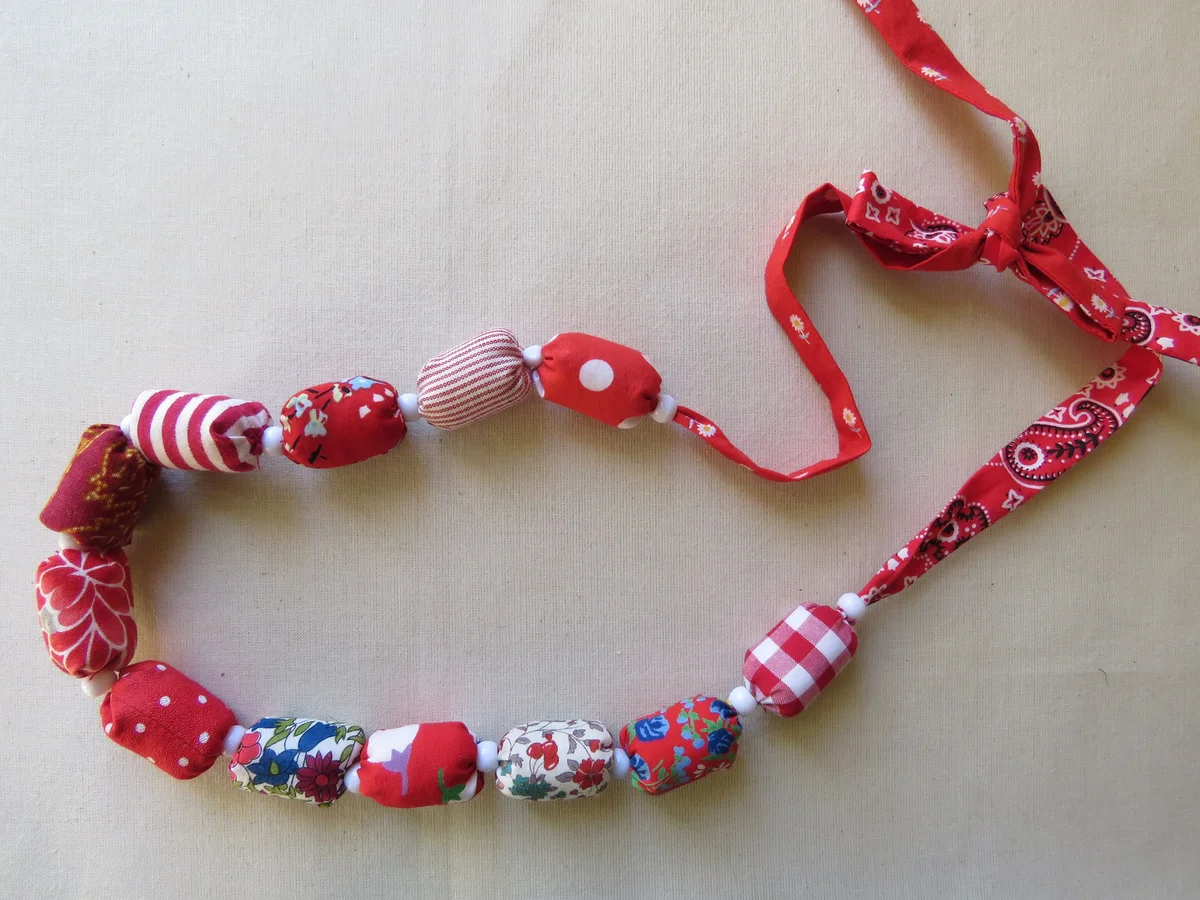
Quick note on where I learned this: the workshop came from Making Zen, a free online event for hand stitchers and crafters that ran in September 2026 with new sessions each day. I’m not being paid to say that — I just thought I’d name the source while the link is still warm. You can see her work on Alison Dawson’s website.
Choosing the fabric
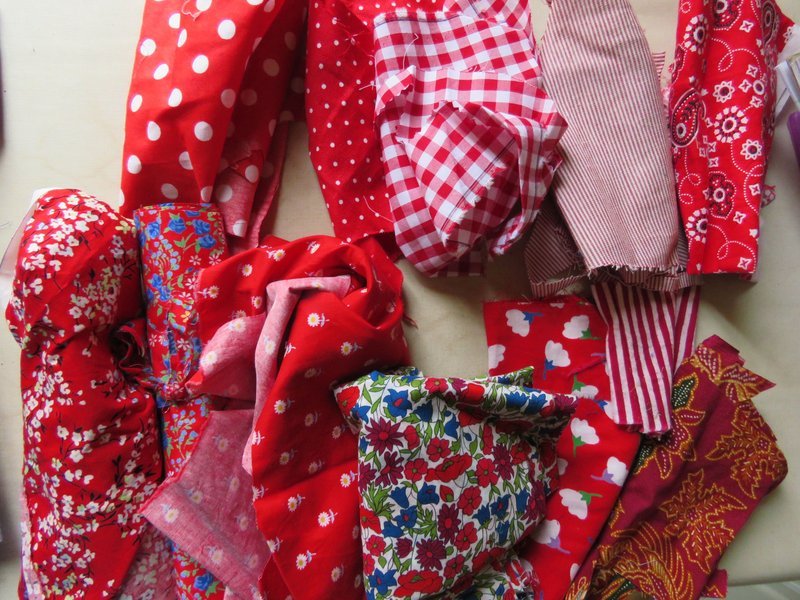
I was spoiled for choice. First I pulled out a blue and white colorway. Clean, a little classic. Then a red and white one. That’s the one I went with, because a red necklace is a head start on your Christmas outfit — and honestly, it’s never too early to think about that white linen shirt situation.
For the beads, my teen gave me free run of her collection. Which was a lot more than I expected. It took me a while to pick, and I don’t regret a single choice.
The one mistake I made (and fixed)
The cutting went fine. All the pieces were ready to sew in no time. I sewed the little fabric tubes that become the “beads” and pressed the seams open with a chopstick, feeling very clever about it.
Then I looked at my work and felt a small pang. My beads were long and thin — nothing like the plump, proper ones in the workshop. A quick check of the video and there it was: I’d sewn them around the wrong way. Gah. Suddenly I saw unpicking in my future.
It didn’t take long, though. Back on track, and the handsewing part became a pleasant hour or so lying on my bed. Which, if I’m honest, was the best part of the whole project.
What it goes with
It came out so well that I kept reaching for it. Lightweight to wear, and it plays nice with a lot of things in my closet. I tried it against a few different tops. The best two pairings: a classic white shirt, and my blue chambray shirt. It’s also worked well with a striped pleated top and a red asymmetrical piece from an older zero-waste sewing project of mine.
Here’s the cost math I keep coming back to: fabric from a bag that already existed, beads from a teenager’s collection, one evening of hand stitching. The cost-per-wear on this thing is basically zero. That’s the kind of piece that earns its place in a capsule wardrobe — it’s not a trend, it’s a personal object that gets more interesting the more you wear it.
Frequently asked
Do you need to be good at hand sewing?
Not really. The techniques are basic: straight seams, pressing, and simple hand stitching. If you can hem a pair of pants, you can make this. My mistake was a direction error, not a skill error.
What fabric works best?
Sturdy cotton prints hold their shape best in the fabric beads. Delicate fabrics will work, but they won’t feel as structured. Old scraps are perfect — that’s the whole point.
Is it lightweight enough for everyday wear?
Yes. That was my first worry, and it’s barely there on. I wear it over shirts and knits without it catching or weighing down the neckline.
A note from Lena: I used to buy the trend first and ask questions later. This necklace was made from fabric I was supposed to “use one day” — and now it’s the piece I actually reach for. That’s the whole game.
Related reads: Building a capsule wardrobe that survives real life and Cost-per-wear, explained with actual math.