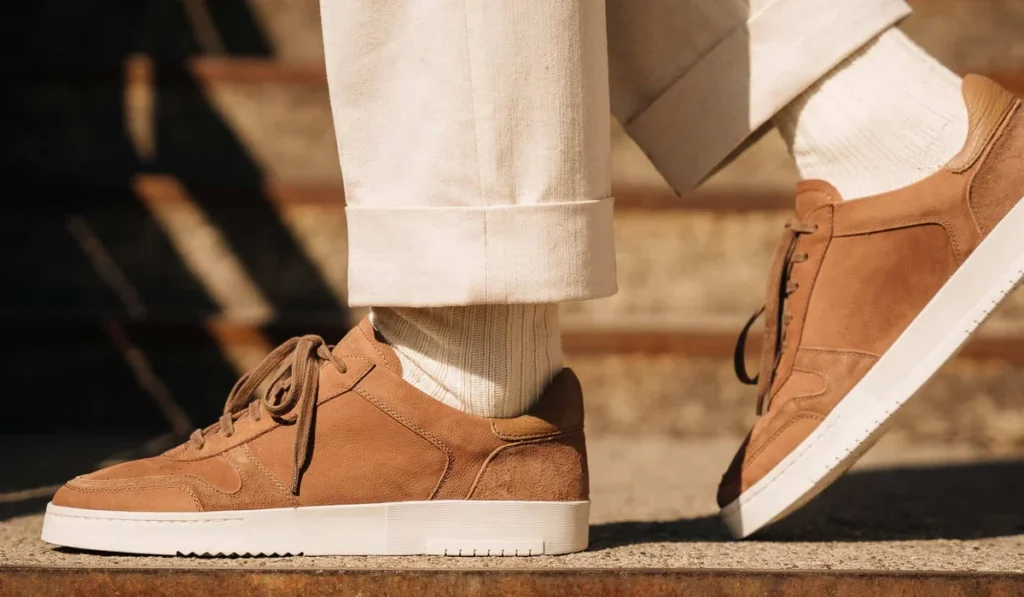
There was a pair of sneakers in my closet that did exactly what I needed them to do. No logo the size of a headline, no neon sole, nothing begging for a photo. Just soft leather, a clean line, and a heel that had survived two years of commutes without complaining. I stood in front of my closet that morning and realized the most expensive-looking pair I owned was the one nobody could name.
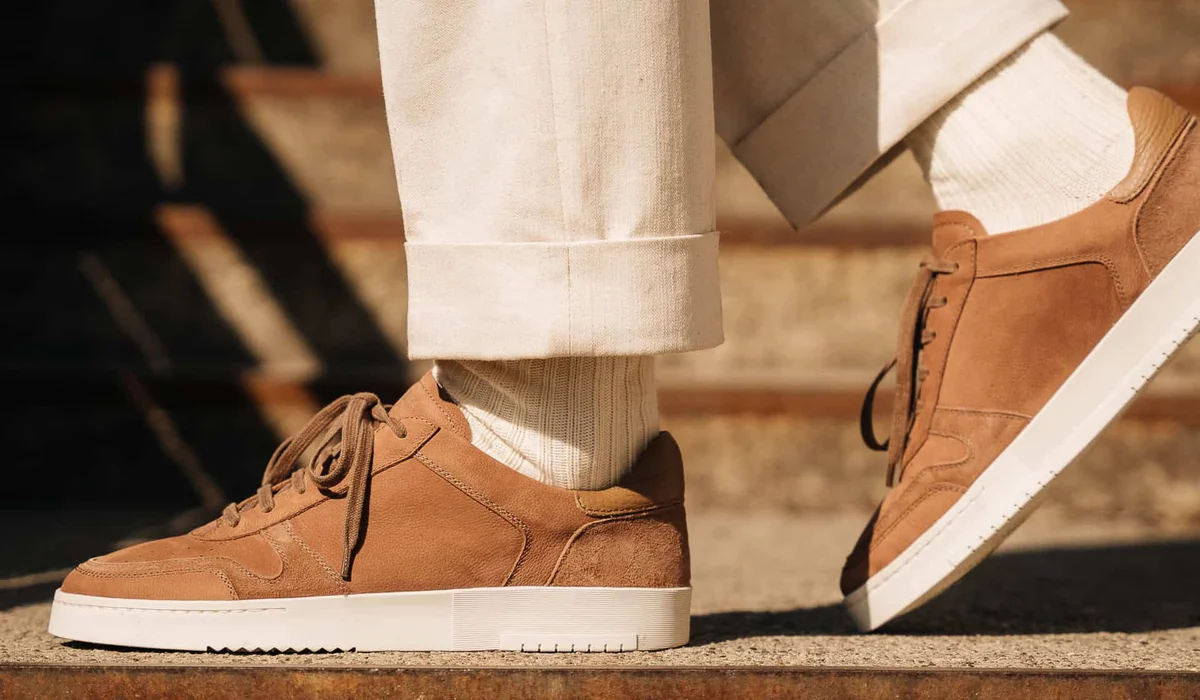
That’s the whole trick of quiet luxury, and it applies to sneakers just as well as to anything else in your rotation. High quality, fine materials, stripped-back design. The piece is confident enough to stand on its own, so it doesn’t need a logo doing the talking. In sneaker terms: simple silhouettes, Italian leather or suede, and a finish that mingles with tailoring just as easily as it does with sweatpants and good jeans.
I spent five years buying for a department store, and here’s the part nobody tells you: the quietest shoe on the floor is often the one that sells out first. Below are the brands that have actually earned that reputation — in the order I’d shop them.
Common Projects
When people ask me where minimalist sneakers started, I point at Common Projects. The American label essentially wrote the rulebook, and it changed what we’re allowed to call smart versus casual in footwear.
The Achilles Low is the one. Simple silhouette, high-quality materials, each pair handmade in Italy, and that small gold foil numbering on the heel that anyone in the know spots from across the room. They say so much while saying almost nothing — which, honestly, is the entire point. If your budget is a splurge and you want the reference pair, this is it.
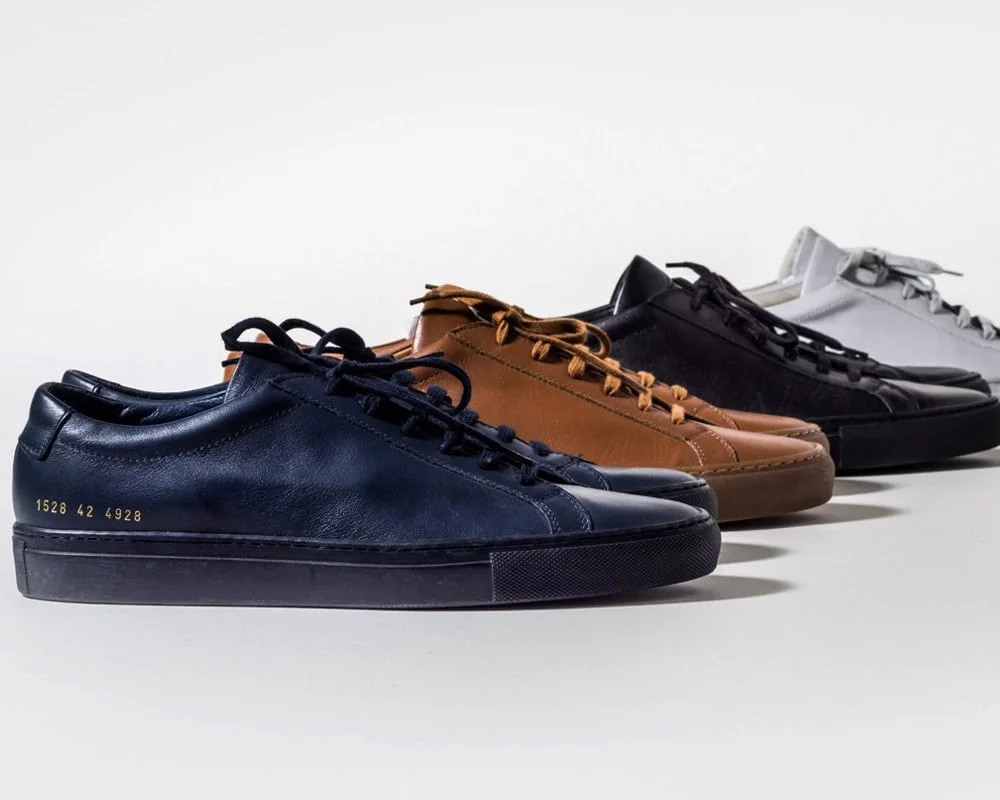
On my feet the Achilles breaks in softer than I expected, and the leather keeps its shape after a full day standing. It’s the pair I reach for when I want to look put-together without thinking about it.
Maison Margiela
Before Common Projects was even a twinkle in its founders’ eyes, there was Maison Margiela. The Parisian house, founded by Belgian designer Martin Margiela, is famous for its avant-garde, deconstructivist work — but it’s also behind what I’d call the original quiet luxury sneaker: the Replica.
The Replica is based on a standard-issue German Army trainer. Margiela took that plain, utilitarian design and ran it through a high-fashion lens: every line perfected, every panel of suede meticulously mapped out, the materials upgraded to something genuinely luxurious. It’s still popular after a quarter of a century, and that’s the whole argument for buying it.
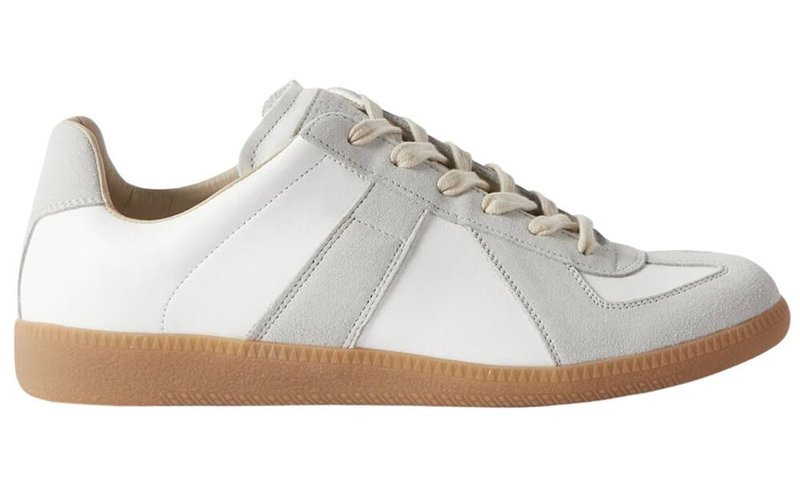
I’ve worn the Replica with everything from a wool blazer to a simple tee and denim, and it never reads out of place. The toe box runs true to size, and the suede gets a little softer with every wear.
Myrqvist
This is where the list gets practical. The Swedish brand Myrqvist set out with a clear mission back in 2016: make high-quality footwear as affordable and accessible as possible. Their sneakers aren’t cheap — don’t let anyone tell you otherwise — but they’re meaningfully less than comparable pairs from so-called luxury houses.
The shoes are made in Portugal, use traditional shoemaking techniques and quality materials, and the brand sells direct to keep costs down. What you’re left with is exactly what you want from this category: no obnoxious branding, no gaudy colours, just clean sneakers made with serious attention to detail. If you’re building a capsule wardrobe on a real budget, Myrqvist is where I’d start.
JAK
JAK is the name I give people when they ask for the Common Projects alternative. Also Portuguese-made, this minimalist label is known for stripped-back designs, buttery-soft leather, and aesthetics that don’t date. The brand makes loafers, boots, and a small range of clothing, but the sneakers are where it really shines — everything from basketball-inspired high-tops to classic court shoes, all held together by the same restraint.
The leather on the court styles is genuinely soft out of the box, and the fit runs clean and narrow, which I think works in your favour if you have a slimmer foot.
TOD’S
Since the 1970s, TOD’S has been the go-to Italian label for luxurious loafers and driving shoes — refinement without ever needing to shout about it. Its sneakers follow the same script: high-end materials, Italian manufacture, and not an oversized logo in sight.
Not everyone will recognise what they are. That’s the point. If you know, you know.
Zegna
Zegna is better known for its tailoring than its footwear, and that’s fine — but the Triple Stitch is a sneaker that belongs on this list. It’s a casual slip-on with the look of a trainer and the DNA of a dress shoe, built from premium materials with an elastic retention system that keeps it locked in place.
On paper it sounds a little outlandish. On your feet it reads restrained and low-key, which is exactly why it keeps selling. I’ve paired it with unstructured tailoring and it bridges the gap better than any dress shoe I own.
Velasca
Velasca is about bringing Italian craftsmanship to a wider audience without charging exorbitant prices. The brand now makes a full range of Italian-made menswear, from tailoring to hoodies, but footwear is where it cut its teeth — and it shows. Every sneaker is handmade in Montegranaro, effectively the capital of Italian shoemaking. Quality is off the scale, and while the prices are still high, they’re competitive for sneakers of this standard.
Axel Arigato
If any brand on this list is the outlier, it’s Axel Arigato. The Swedish label runs a little more visible than the rest — but subtle and clean, always. Minimalism is the throughline of everything it does, and even when it experiments with bigger, bulkier shapes, the mood stays one of restraint and quality.
Fans of simplicity will gravitate toward the clean lines of the Clean 90; if you want something a touch more retro and sporty, the Clay and the Daze Runner are where to look.
Tom Ford
Tom Ford is best known for fragrances and razor-sharp tailoring, but the sneakers hold their own. Unapologetically opulent in full-grain leather, with glistening hardware and flawless finishing, they’re as beautifully executed as the brand’s famous suits. The shapes are classic, the branding is essentially invisible, and the prices, unsurprisingly, are among the steepest you’ll find anywhere.
The cost-per-wear math
Here’s how I actually decide. A quiet luxury sneaker is a splurge-tier purchase, but the math works if you treat it like a workhorse. Let’s say a pair is a serious splurge and you wear it 40 times over its life. That’s one-fortieth of the price per wear — which, for a pair that goes with everything in your closet, is honestly cheaper than the trendy pair you wore three times and retired.
My rule of thumb: under $50 for rotation sneakers, $50–100 for a solid everyday pair, splurge for the one pair you’d buy again if it disappeared. Quiet luxury lives in that last bucket — and it’s the bucket that justifies itself.
FAQ
Are quiet luxury sneakers worth the price?
If you’re buying for rotation, yes. A pair you wear 40+ times over several years costs less per wear than a cheaper pair you retire in a season. If you’re buying for a trend, wait it out.
What’s the most affordable way in?
Myrqvist and JAK are the practical entry points — Portuguese-made, minimal branding, and significantly less than comparable luxury labels.
Do these sneakers actually work with everything?
They’re built to. Clean lines and neutral materials mean they sit happily with tailoring, denim, and casual wear alike. That versatility is the entire reason the category exists.
A note from Lena
I still catch myself reaching for the loud pair sometimes. But every season, the quiet ones are the ones still in rotation a year later. Buy the shoe that speaks quietly — it’s the one that’ll still be on your feet when the trend is gone.
Related reads: How I Built a 20-Piece Capsule Wardrobe and Cost-Per-Wear: The Math Behind My Closet.